%20--%3e%3cdefs%3e%3cstyle%3e%20.st0%20{%20isolation:%20isolate;%20}%20.st1%20{%20fill:%20%23e0fd36;%20fill-rule:%20evenodd;%20}%20%3c/style%3e%3c/defs%3e%3cg%20id='Artboard_1'%20class='st0'%3e%3cg%20id='Altnets_logo_copy'%3e%3cpath%20class='st1'%20d='M603.6,445.35c0,21.03,11.78,30.29,29.87,30.29,6.52,0,14.19-.97,21.86-2.9v-110.46h-51.72v83.08h-.01ZM245.21,293.08l-50.27,125.14h100.12l-49.85-125.14h0ZM1434.08,395.51c-25.03-6.1-37.86-9.67-37.86-20.61,0-10.1,11.99-16.2,29.45-16.2,21.45,0,36.39,10.94,45.22,25.03l34.49-28.39c-14.51-21.87-39.96-42.07-80.98-42.07-43.96,0-78.87,24.4-78.87,62.26,0,41.43,31.13,55.53,75.3,65.41,24.61,5.47,35.33,9.25,35.33,19.98,0,11.36-12.62,17.67-28.81,17.67-20.4,0-41.01-12.2-53.21-31.13l-36.18,29.24c18.3,28.6,50.27,46.9,90.02,46.9,43.12,0,79.71-24.61,79.71-62.68,0-39.96-28.6-54.47-73.61-65.41h0ZM1039.09,313.27c-59.94,0-103.69,43.33-103.9,104.95,0,58.89,41.64,105.58,106.42,105.58,35.55,0,70.88-17.04,89.81-48.59l-38.28-28.6c-13.04,19.14-30.29,28.39-50.27,28.39-25.66,0-49.85-16.62-53.84-40.38h145.97c1.26-7.99,1.89-15.56,1.89-22.93,0-61.2-42.28-98.43-97.8-98.43h0ZM989.87,398.45c2.94-22.93,23.14-39.75,49.85-39.75s44.17,17.25,46.9,39.75h-96.75ZM1277.6,475.64c-18.09,0-29.87-9.25-29.87-30.29v-83.08h59.31v-44.8h-60.57v-64.78h-52.37v64.78h-34.28v44.8h34.07v90.86c0,47.53,29.87,70.46,74.24,70.46,16.41,0,36.39-4,48.8-10.1l-5.05-44.8c-11.36,4.63-24.19,6.94-34.28,6.94h0ZM0,522.62l655.33,257.78v-260.81c-10.1,2.52-21.37,4-31.32,4-44.38,0-74.25-22.93-74.25-70.46v-90.86h-34.07v-44.8h34.28v-64.78h52.37v64.78h52.99V0L0,257.78v264.84ZM424.4,223.25h53.84v296.14h-53.84V223.25ZM212.4,233.76h65.2l115.47,285.62h-60.57l-21.03-55.95h-132.51l-21.24,55.95h-60.57l115.26-285.62h0ZM820.34,313.27c-30.08,0-51.74,13.46-62.26,27.55l-1.05-23.35h-51.32v201.91h53.84v-112.95c0-27.97,21.03-43.12,44.8-43.12s41.85,15.14,41.85,43.12v112.95h53.84v-126.83c0-48.59-33.02-79.29-79.71-79.29h.01Z'/%3e%3c/g%3e%3c/g%3e%3c/svg%3e)
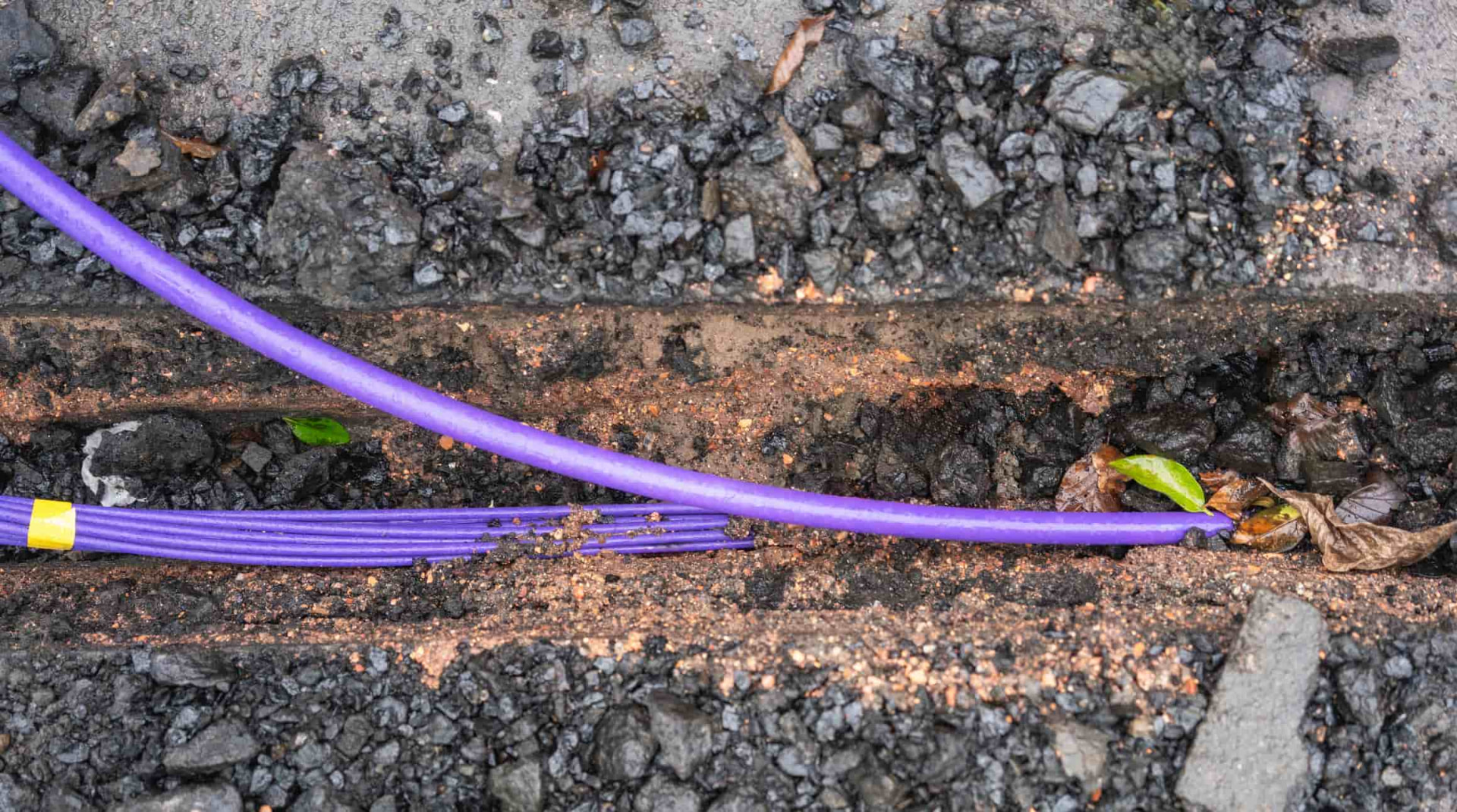
Fibre infrastructure faces environmental threats from rodents, UV light, water damage and chemical hazards. Learn how resistant cable types and materials keep networks reliable.
Fibre infrastructure is essential in modern communications infrastructure, supporting the transmission of data at high speeds across long distances without losing strength. Businesses, mobile operators and data centres particularly benefit from the use of fibre infrastructure in their networks.
To continue supporting them, this infrastructure needs protection.
It faces a multitude of environmental risks, including: rodents, exposure to UV (ultraviolet) light, water damage and chemical hazards - all of which can degrade valuable equipment. Managing these risks through specific resistant cable types and materials supports the efficient, reliable and continued delivery of connectivity that modern society so heavily relies on.
Protection against rodents
Rodents are one of the biggest threats to fibre infrastructure, causing damage to cables that affect network reliability. Rat- and mouse-damaged cables are usually found underground or in supply ducts, where the animals move around, with the thinness of fibre cables making them a target for chewing by rodents passing by. By gnawing on wires and nesting in underground ducts, they expose and weaken cables, creating disruptions in connectivity that often require repairs, and in severe cases, result in an entire loss of connectivity.
To deter and protect against rodent interference, consider choosing:
- Glass roving sheathing — Made from fine glass fibres, this splinters when bitten into, causing discomfort to rodents which discourages further chewing.
- Steel tape armouring — Rodent teeth cannot bite through the hard steel layer in the cable that protects the inner core and fibres.
- FRP (fibre-reinforced plastic) rod armouring — Works in a similar way to steel tape armoring, made from densely packed fibres that cannot be bitten through by rodents.
Risk from UV exposure
Prolonged and continuous exposure to UV light can degrade the materials of fibre cable jackets, turning them brittle and causing them to lose their structure. This increases the likelihood of damage during maintenance. Cracks in the jackets can pose an additional risk, leaving inner fibres vulnerable to water damage from rain and moisture. Over time, the effect of UV rays can diminish fibre signal strength, reducing transmission speeds and network performance.
Periodically inspecting cables for cracks and discoloration can help to identify degradation before it starts to affect performance. Installing duct grade cables with UV resistant jackets, made from PE (polyethene), protects against UV damage by absorbing rays and converting them into heat, reducing brittleness, cracks and discoloration. These cables have an extra level of protection if they are pulled through ducts, which further encloses them in UV resistant materials.
Preventing water damage
Damage to outer jackets and poor sealing during installation can cause water to seep into fibre cables, where rain and moisture weaken their structure and expose them to further damage. Water absorption can cause mechanical damage to fibre strands, reducing their strength and flexibility, which leaves cables vulnerable to damage during operation. The polymers in some cable jackets and coatings are highly absorbent, causing swelling and shape changes in materials. The expanding jackets begin to weigh down on the strands inside, creating internal stress and reducing structural integrity, which accelerates degradation and reduces the fibre's efficiency.
Water damage can be managed through correct material, design and installation considerations. Selecting cables designed with water blocking properties that will maintain performance over time and employing additional waterproofing methods will safeguard fibre infrastructure, supporting network reliability. Consider installing durable and waterproof PE-jacketed cables and using waterblocking tapes and gels to fill in potential entry points to prevent absorption. During installation, ensure all joints and entry points are sufficiently sealed and regularly inspect conduits and ducts for rust, cracks and loose fittings. Duct grade cable made with a PE outer sheath is ideal for water blocking - designed to be pulled through ducts, providing a protected and secure system.
Resistance to chemical hazards
Fiber installations in industrial and agricultural areas are most at risk from chemical damage. Acids and oils dissolve jacket materials, fertilisers and pesticides react with and corrode materials, and metals found in soils can react with cable jackets which causes them to deteriorate. Chemical damage weakens the protective layers around cables, exposing internal systems to further damage, i.e, from water.
Cables with specialised jackets are able to protect against deterioration from chemicals. PTFE (polytetrafluoroethylene), PE and CPE (chlorinated polyethylene) jackets are all made from durable materials that are able to withstand harsh industrial environments and do not react with chemicals, providing the best protection for fibre infrastructure.
For additional protection, HDPE (high-density polyethylene) conduits have strong resistance to chemicals and corrosion, ensuring long term durability of optical fibres.
Protecting from environmental damage reduces disruption - and cost
Selecting jacket material types and specifications that correspond to the build environment will reduce failure rates and safeguard fibre infrastructure, ensuring continuous network strength reliability and durability while reducing time and money lost to maintenance.
Looking to protect your infrastructure? We advise customers how to design builds with reliable, long lasting solutions, to ensure your fibre infrastructure maintains its quality and connectivity. Contact a member of the team today to access the best solutions for your next fibre installation.