%20--%3e%3cdefs%3e%3cstyle%3e%20.st0%20{%20isolation:%20isolate;%20}%20.st1%20{%20fill:%20%23e0fd36;%20fill-rule:%20evenodd;%20}%20%3c/style%3e%3c/defs%3e%3cg%20id='Artboard_1'%20class='st0'%3e%3cg%20id='Altnets_logo_copy'%3e%3cpath%20class='st1'%20d='M603.6,445.35c0,21.03,11.78,30.29,29.87,30.29,6.52,0,14.19-.97,21.86-2.9v-110.46h-51.72v83.08h-.01ZM245.21,293.08l-50.27,125.14h100.12l-49.85-125.14h0ZM1434.08,395.51c-25.03-6.1-37.86-9.67-37.86-20.61,0-10.1,11.99-16.2,29.45-16.2,21.45,0,36.39,10.94,45.22,25.03l34.49-28.39c-14.51-21.87-39.96-42.07-80.98-42.07-43.96,0-78.87,24.4-78.87,62.26,0,41.43,31.13,55.53,75.3,65.41,24.61,5.47,35.33,9.25,35.33,19.98,0,11.36-12.62,17.67-28.81,17.67-20.4,0-41.01-12.2-53.21-31.13l-36.18,29.24c18.3,28.6,50.27,46.9,90.02,46.9,43.12,0,79.71-24.61,79.71-62.68,0-39.96-28.6-54.47-73.61-65.41h0ZM1039.09,313.27c-59.94,0-103.69,43.33-103.9,104.95,0,58.89,41.64,105.58,106.42,105.58,35.55,0,70.88-17.04,89.81-48.59l-38.28-28.6c-13.04,19.14-30.29,28.39-50.27,28.39-25.66,0-49.85-16.62-53.84-40.38h145.97c1.26-7.99,1.89-15.56,1.89-22.93,0-61.2-42.28-98.43-97.8-98.43h0ZM989.87,398.45c2.94-22.93,23.14-39.75,49.85-39.75s44.17,17.25,46.9,39.75h-96.75ZM1277.6,475.64c-18.09,0-29.87-9.25-29.87-30.29v-83.08h59.31v-44.8h-60.57v-64.78h-52.37v64.78h-34.28v44.8h34.07v90.86c0,47.53,29.87,70.46,74.24,70.46,16.41,0,36.39-4,48.8-10.1l-5.05-44.8c-11.36,4.63-24.19,6.94-34.28,6.94h0ZM0,522.62l655.33,257.78v-260.81c-10.1,2.52-21.37,4-31.32,4-44.38,0-74.25-22.93-74.25-70.46v-90.86h-34.07v-44.8h34.28v-64.78h52.37v64.78h52.99V0L0,257.78v264.84ZM424.4,223.25h53.84v296.14h-53.84V223.25ZM212.4,233.76h65.2l115.47,285.62h-60.57l-21.03-55.95h-132.51l-21.24,55.95h-60.57l115.26-285.62h0ZM820.34,313.27c-30.08,0-51.74,13.46-62.26,27.55l-1.05-23.35h-51.32v201.91h53.84v-112.95c0-27.97,21.03-43.12,44.8-43.12s41.85,15.14,41.85,43.12v112.95h53.84v-126.83c0-48.59-33.02-79.29-79.71-79.29h.01Z'/%3e%3c/g%3e%3c/g%3e%3c/svg%3e)
Cooling, security, power management and compliance all shape street cabinet performance. Here's what to consider when specifying cabinets for full-fibre networks.
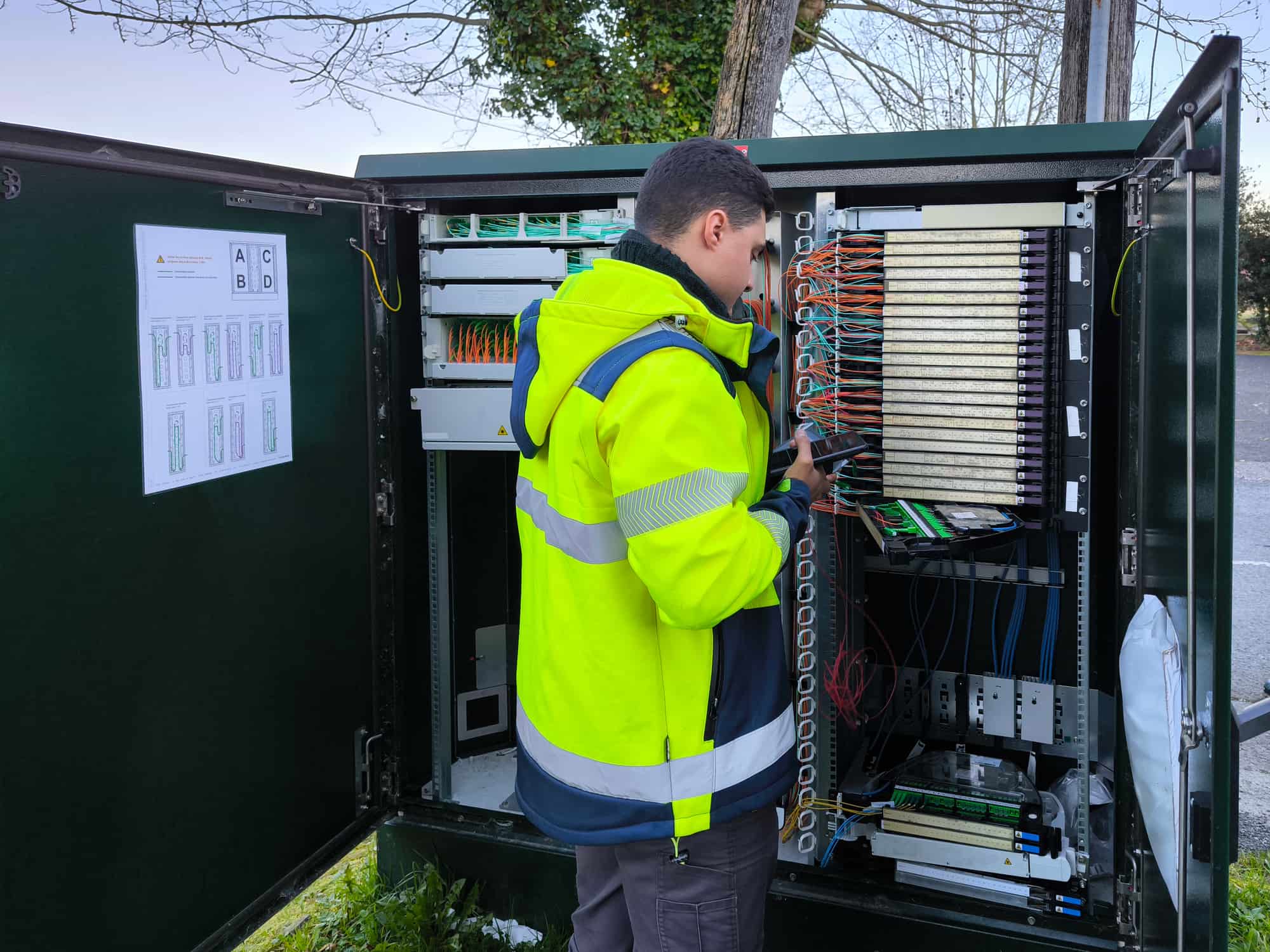
Full fibre networks rely on infrastructure working together, such as cables, ducts, poles, and street cabinets. Street cabinets are secure roadside enclosures that house important telecommunications and electrical equipment, providing a secure environment to deliver reliable connectivity to homes and businesses, improving network reliability.
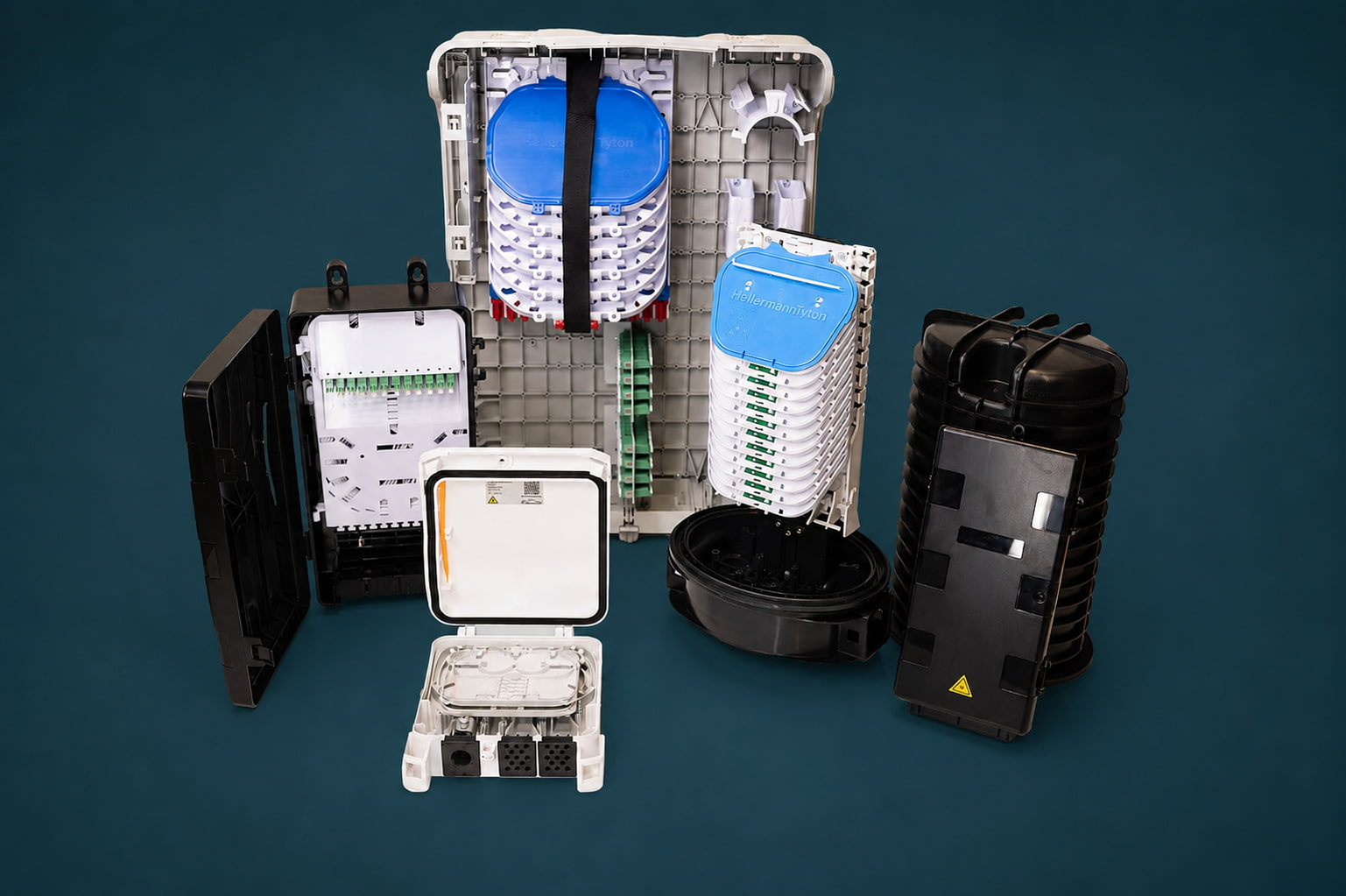
Temperature, security, power management and compliance all need to be considered when selecting a cabinet, as these can all affect network performance. We offer both active and passive variants, with IP55 weatherproofing and DNO-compliant power options, made from GRP and steel.
Cooling & airflow
Keeping cabinets cool is essential for protecting equipment and maintaining reliable connectivity. Excess heat can affect performance, increase faults and, in severe cases, lead to equipment failure. With increased frequency and intensity of heatwaves due to the warming climate, effective cooling methods are even more essential to street cabinet design to maintain equipment quality.
When selecting a cabinet, be mindful of whether passive or active cooling is the best approach. Active cooling uses powered equipment, such as:
- Filter fans
- Heat exchangers
- Thermoelectric coolers
Passive cooling relies on natural airflow, using elements like grilles and vents, lighter-coloured external finishes, and more cabinet space.
The location of the cabinet and the design of the equipment within determine the best course of action. Although ventilation openings can expose outside cabinets to additional moisture, dust, and dirt, passive cooling can lower maintenance requirements. Active cooling is frequently a better option for exterior street cabinets with high heat loads or heat-sensitive equipment, helping to maintain reliability and lower the chance of expensive malfunctions.
Security & protection
Street cabinets contain valuable network equipment and are often placed in public spaces, which leaves them vulnerable to unauthorised entry, vandalism and human-inflicted damage. Effective locking systems and robust cabinet design can keep critical infrastructure safe and minimise disruption to services.
Typical locking systems for street cabinets include:
- Multipoint locking systems — cabinet doors are secured at multiple points
- Heavy-duty cam locks and T-handles — internal locking mechanisms
- High security cylinder locks — resistant to physical tampering such as lock picking
Our partner, iLOQ, offers cloud-based access control and smart, battery-free digital locking systems. Their systems enable permissions to be updated and tracked without the need for conventional keys, simplifying secure access management across residential, business, and critical infrastructure sites.
Materials and cabinet shapes also factor into cabinet safety. Galvanised steel provides a strong, durable barrier against damage from tampering and unauthorised entry. Cabinets built with rounded edges make it difficult for prying tools to get a grip on the doors, which keeps the cabinet securely locked and protects the equipment inside.
Managing cabinet power
Fibre networks rely on consistent power to operate equipment effectively. Cabinet design should consider how equipment is powered and maintained to avoid unnecessary disruptions and loss of connection.
Regular inspections help identify issues early, including:
- Corrosion and damage to equipment or doors
- Damage in electrical connections and fuses
- Dirt or dust inside the cabinet
During an outage, backup batteries maintain a constant stream of power — if only temporarily — in situations where equipment trips and disrupts the power supply. These are installed into cabinets and are a short-term solution for emergencies until in-person maintenance can be done.
Network updates may be considerably simpler with a modular cabinet architecture, which features smaller, interchangeable parts rather than one fixed block. As demand increases, networks can grow without having to replace the entire cabinet by adding more technology, power supply, and capacity.
Meeting industry compliance and standards
Cabinets need to meet industry requirements to maintain secure, stable and efficient equipment, as well as infrastructure quality.
Regulatory compliance is important in adhering to safety and performance criteria and ensures the delivery of high-functioning infrastructure. NEMA ratings (standards from the National Electrical Manufacturers Association) indicate how well cabinets can withstand different environments. Assessing and choosing the correct NEMA rating ensures cabinets remain operational in the environments they're placed in, avoiding costly adjustments, repairs and disruption.
Why the right cabinet choice matters
Street cabinets are an essential part of full fibre networks, keeping critical equipment safe, secure and fully functional. The right cabinet supports reliability, security and future growth, which is ever more important in the rise in network demand.
Choosing the right infrastructure partner is just as important. Altnets combines specialist knowledge, quality products and supply chain expertise to help customers find the right cabinet solutions for modern fibre networks. To find out more or to discuss your requirements, contact our team today.